What are Gypsum False Ceilings?
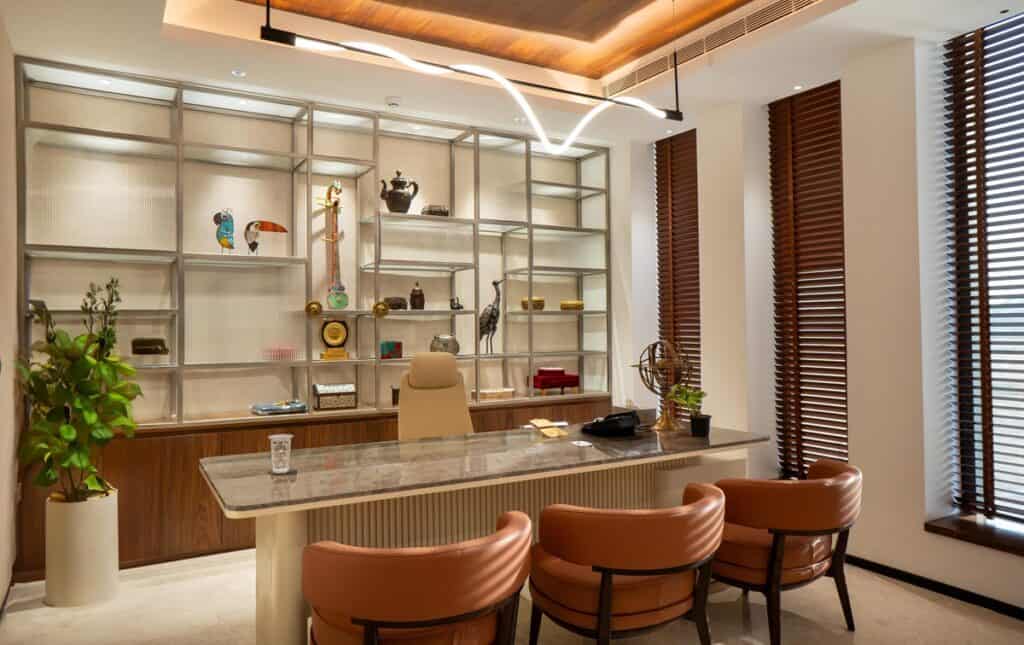
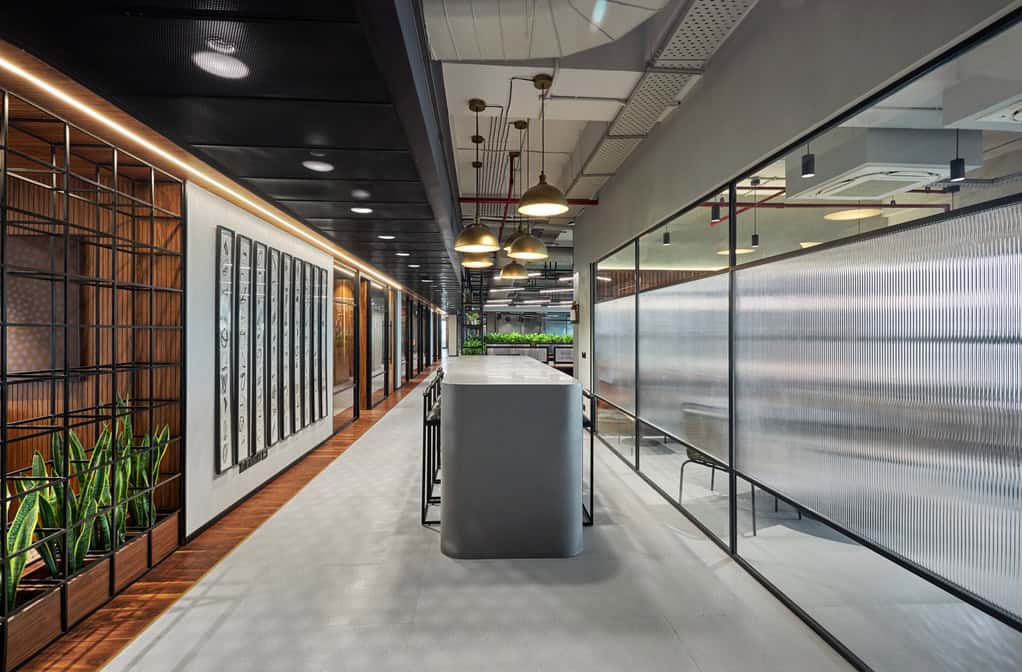
Gypsum false ceilings are suspended or drop ceilings and secondary ceilings, that are hung below the main structural ceiling. Gypsum is a light and flexible construction material. These office ceiling designs have several advantages like aesthetics, acoustics, and easy accessibility to wiring/plumbing and other utilities, making them popular in commercial establishments including offices.
Types of Gypsum False Ceiling Designs
Regular Gypsum false ceiling design
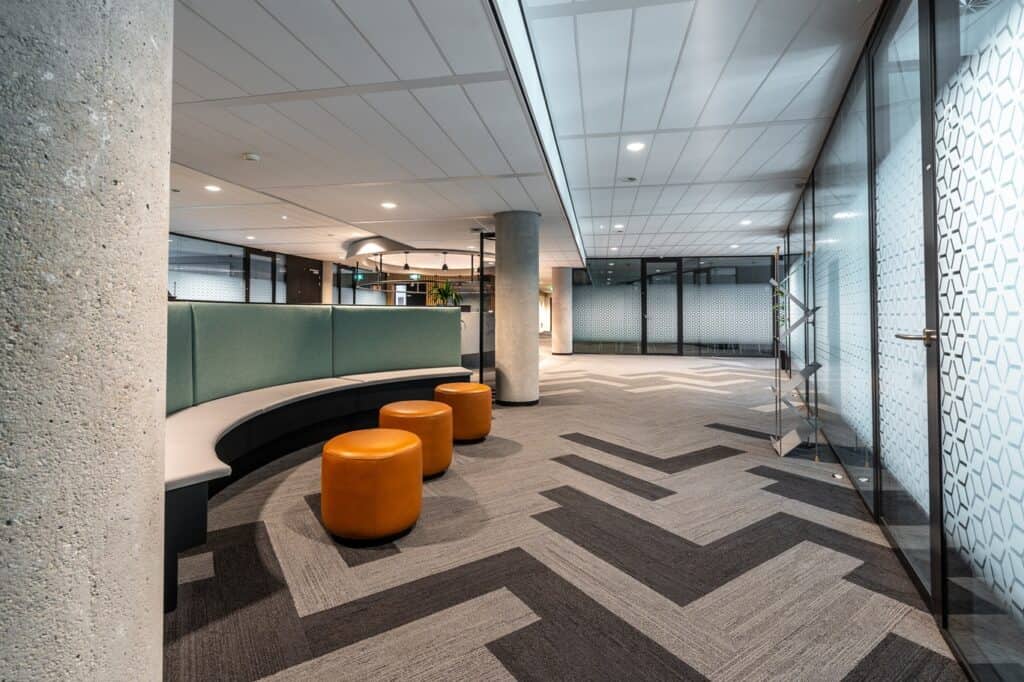
Regular Gypsum false ceilings, or flat Gypsum False ceilings, are the most regularly built kind of Gypsum false ceilings. The Gypsum boards are bunched and suspended from the metal grid technique in such a way that it creates an entirely flat and smooth top; it can then be given a variety of different finishes.
Patterned Gypsum false ceiling design
In patterned false ceilings, professionals carve a pattern on the Gypsum false ceiling board. This slice is carved on the boarding material itself and enhances the interior decoration of the space.
Also Read : POP False Ceiling Designs for the Office
Curved Gypsum false ceiling design
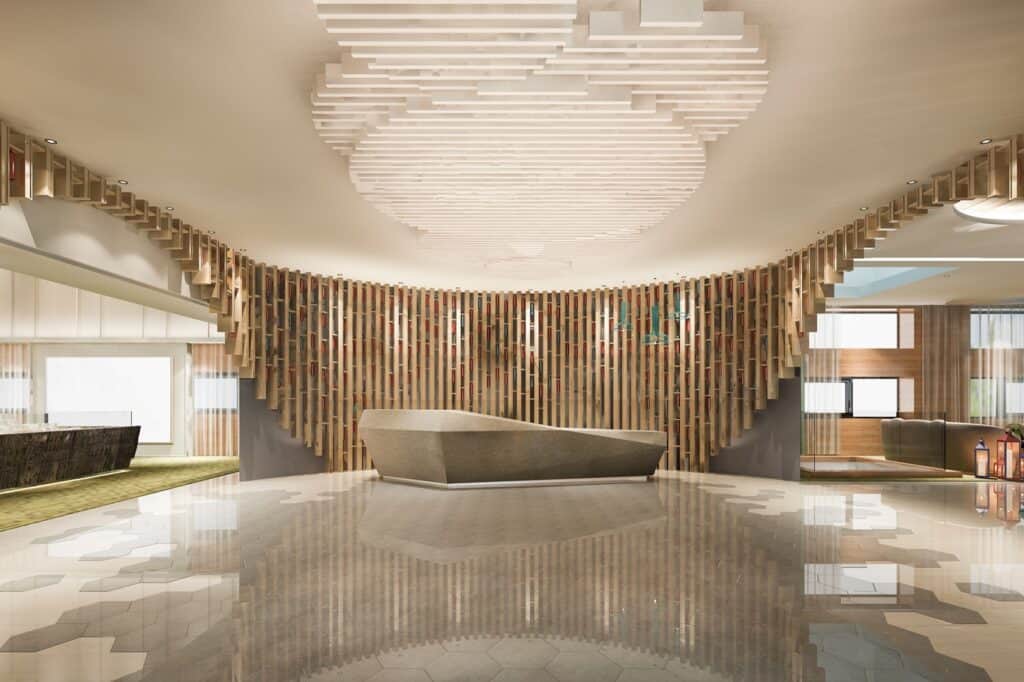
These false ceilings are constructed to the demand of the user. Curved ceiling patterns are known to have a round or almost arched appearance. A curved roof may be found in buildings that have little room for sloping roof construction.
Acoustic Gypsum false ceiling design
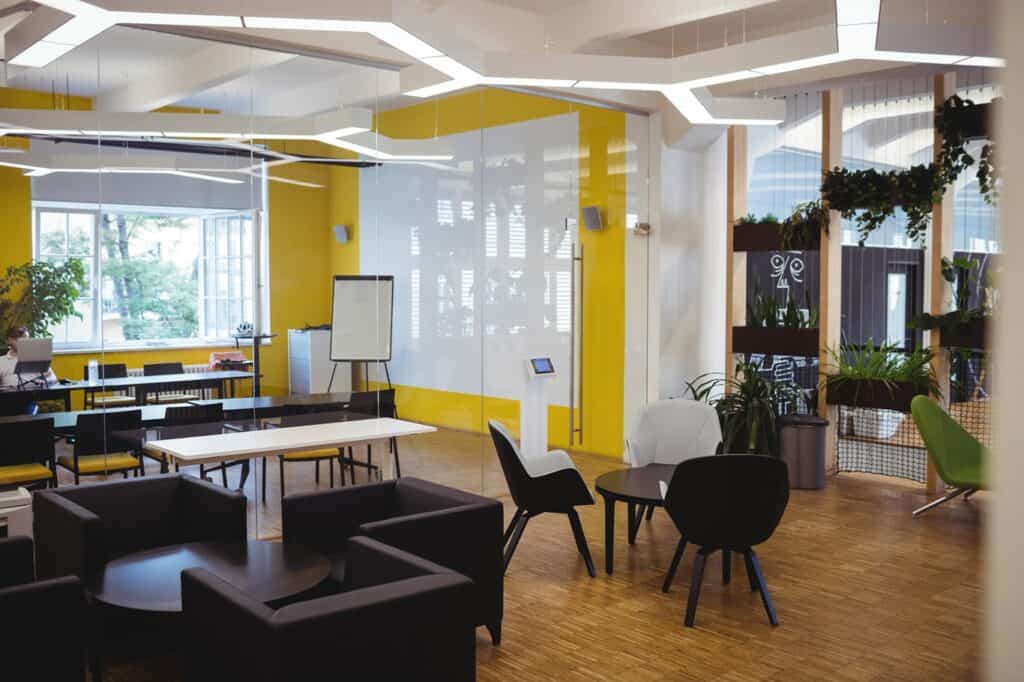
Acoustic Gypsum false ceilings are specifically designed for sound absorption and to decrease the level of ceiling noise. Depending on the requirements, this can be achieved by using specific panels or insulation materials to enhance the ceiling’s acoustic features, making them suitable for conference rooms.
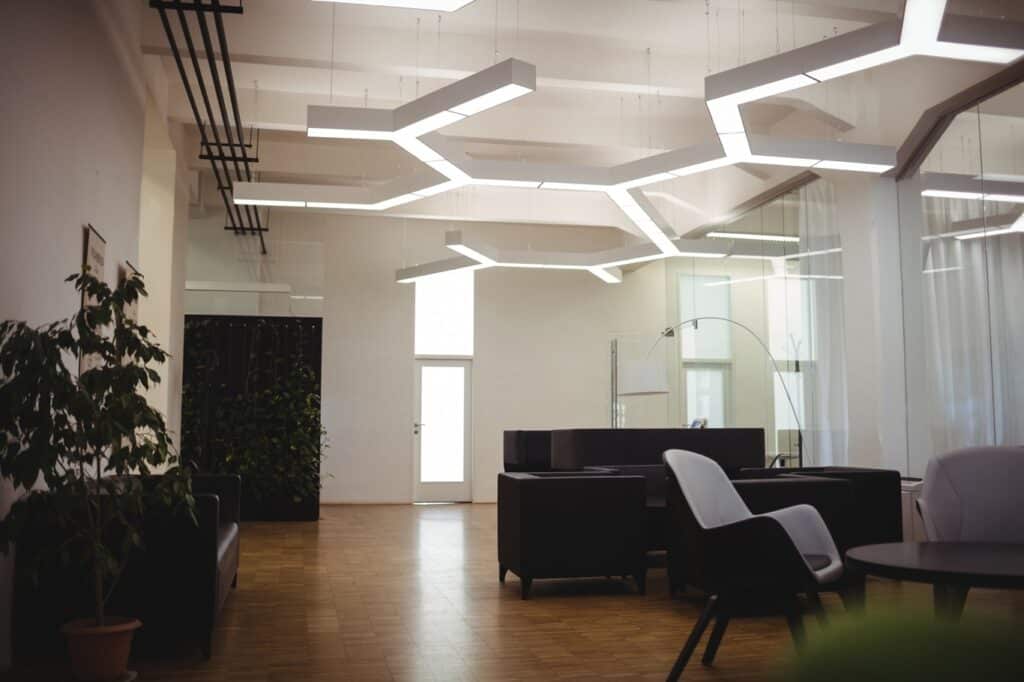
Luminous Gypsum false ceiling design
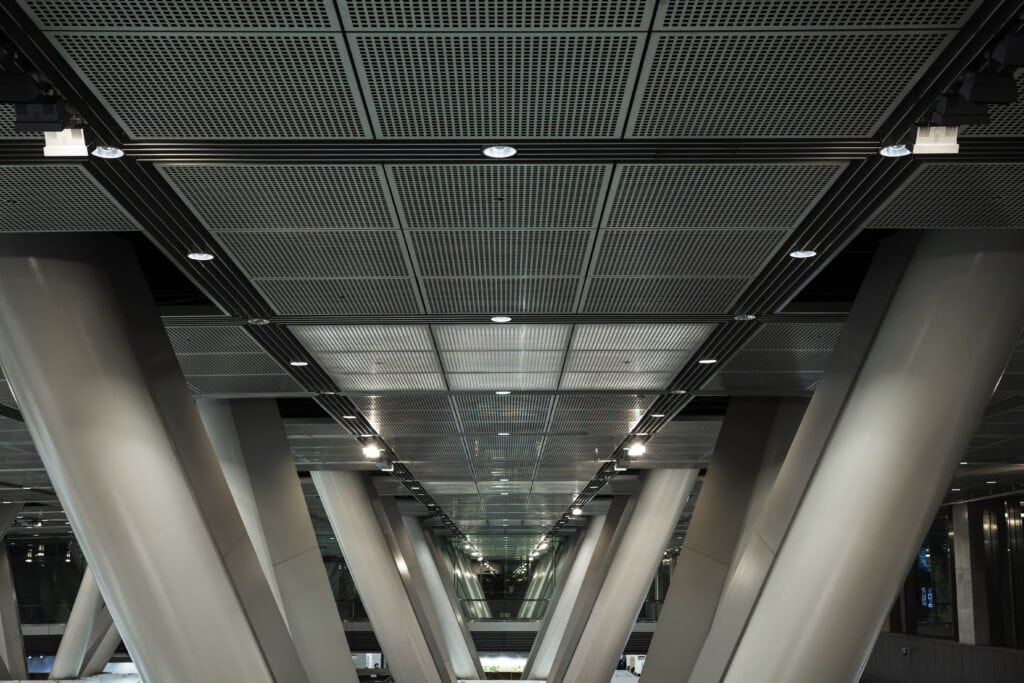
Luminous false Gypsum ceilings are those with incorporated lighting fixtures in the false ceiling Gypsum boards or the grid system supporting it. Not only do these ceilings offer the required light, but they also provide an aesthetic atmosphere to working and living spaces.
Also check out open office ceiling design ideas
Step-by-Step Guide on How to Install Gypsum False Ceilings in Your Offices
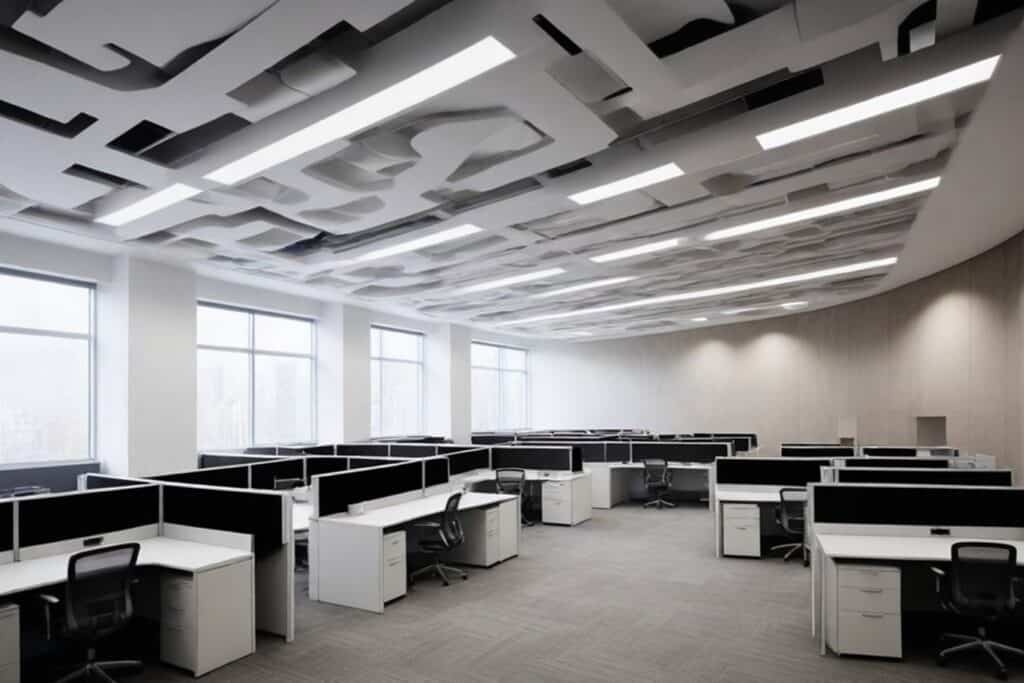
The project of installing Gypsum false ceilings can turn around the general feel of your office environment while improving its functionality. The following is a simple Gypsum false ceiling design guide to delivering the process with optimum efficiency:
Planning and Preparation
Begin by measuring the length and the width of the room to calculate how much material you need. Inspect the existing ceiling and complete any fixing or reinforcement if necessary. Design your ceiling grid and determine where it would go, making sure it accommodates the lights, side-core air vents, and other affected features. With the material in hand, make sure you equip yourself with all necessary tools and equipment such as Gypsum boards, metal framing, screws, and a spirit level.
Suspension system installation
We recommend that you install the perimeter track along the walls first to make it straight and level. Next, install the main tees perpendicular to the perimeter track in the arrangement recommended by the manufacturer. Together, form the grid by running cross tees in between the main tees, cutting them to fit the layout. Fasten the suspension system to the ceiling with correct anchors or fasteners; make sure the system is adequately secured to the support.
Install the Gypsum Boards
Once the Gypsum boards are of the right size, place them on a grid framework. Make sure they are aligned properly, and use a spirit level to ensure they are straight. Lower the jacks when needed. Use screws to fasten them in place, placing them evenly along the edges of the boards and around the holes where they meet other boards. Continue until the surface of the ceiling is completely covered evenly spaced and levelled.
Finishing touches
Remove any space or seam between the Gypsum boards utilising joint components or filler and smoothing it removed to create the final layer. Sand the joints and edges of the Gypsum planks to achieve a completely smooth covering, take care not to damage the area around them.? Prime the Gypsum planks to help the colour or other finishes adhere better. To achieve the desired appearance, apply the finish you like, such as colour or texture. As specified, install the light fixtures, air ducts, and other accessories that may be required.
Final inspection
Examine the final product of the Gypsum false ceiling design and verify it is up to standard. Rectify any faults such as cracks, un-levelled areas, and fittings to ensure it is perfect. Ensure your lighting and utilities are well fixed and all appliances are returned to position. Clean up your work area by removing dirt and excess materials leaving the office neat for use.
Conclusion
Gypsum false ceilings are a great idea when you want to create an attractive and useful green office interior design. This way, you can significantly upgrade the space with ease. Using the above how-to guide successfully will yield professional outcomes that will give your office the design finish it deserves. This can also be applied if you want to upgrade your current office or furnish a new one.


Want to Install Stunning Gypsum False Ceiling Designs in your Offices?
You are at the perfect place, Officebanao has you covered, with a team ready to turn your workspace into something awesome. We’re talking about transforming that boring office into a place that sparks creativity and keeps you feeling energised.
OfficeBanao uses all the latest techniques to create a space that reflects your company’s unique vibe. Think of a make-over with a new ceiling, creative office cubicle design ideas, and a layout that makes working together, we can deliver it all. We can turn your plain-jane-looking ceilings into stunning Gypsum false ceiling designs.